
Why chat beats a plain contact form
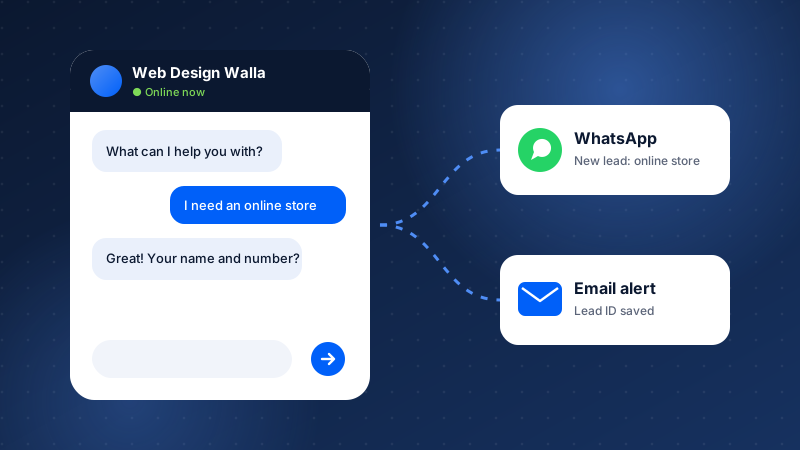
A form feels like paperwork. A chat asks one easy question at a time, so people give their name and number before they realise they have filled in a form. Many also prefer WhatsApp, which they already use all day.
Start with answers, not a lead grab
Let visitors ask about price, timeline and process first. A bot that answers common questions builds trust, and the contact request then feels like a natural next step rather than a demand.
Ask for the minimum
Name, phone, and what they need is usually enough. Every extra field loses people. You can ask for more detail on the call.
Never lose a lead
Send every enquiry to your email and store a copy on the server with a reference number. If an email fails, the lead should still be saved, and the visitor should see a clear retry option.
Respond fast
Replying within minutes makes a big difference to whether an enquiry becomes a client. Instant alerts by email or WhatsApp, plus a booking option for a call, help you answer while interest is high.
Be honest about hours and prices
Show your working hours, and give price ranges only where you can stand behind them. An honest range filters out mismatched enquiries and builds trust with the right ones.
Measure what works
Track chat opens, estimates requested and enquiries sent. These numbers show which pages bring in real leads, so you can improve them instead of guessing.
Protect visitor data
Collect only what you need, keep stored leads behind a password, and never expose them on a public URL. Tell visitors how their details are used.
Our own website now uses a lead chatbot like this one. If you would like one for your business, get in touch and we will set it up with your prices and hours.